US Visa Administrative Processing: Why It Happens and How Long It Takes
Administrative processing is a 221(g) hold placed after your US visa interview when the consular officer needs information from sources other than you. The State Department publishes no fixed timeline: it says the duration varies case by case and asks applicants to wait at least 180 days before requesting an update. CEAC shows the case as Refused throughout and switches to Issued only once the visa is printed.
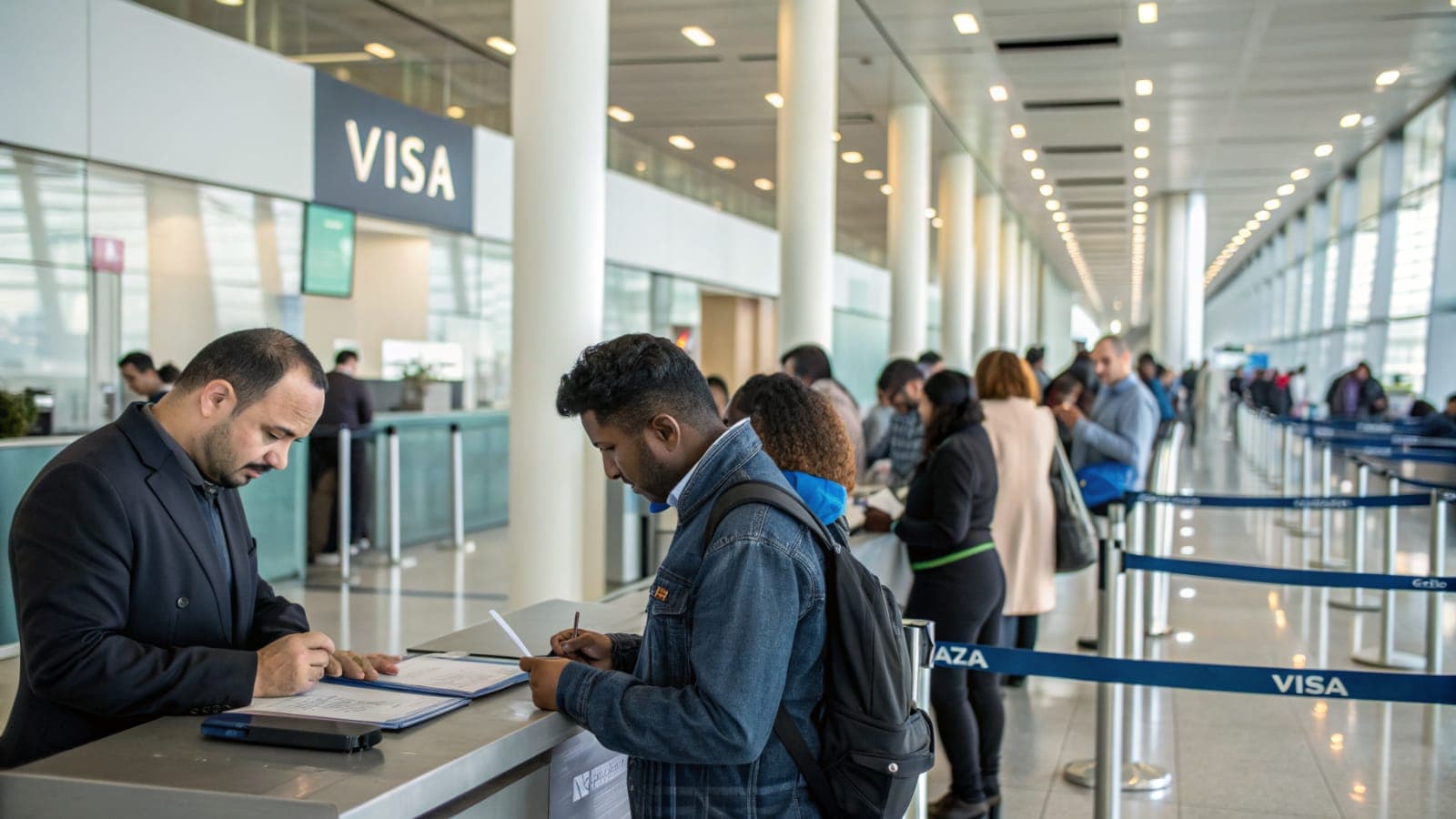
Administrative processing happens when the consular officer needs information from somewhere other than you before deciding your US visa, and there is no fixed timeline for it. The State Department says the duration varies with the circumstances of each case, and it asks you to wait 180 days before chasing a status update. Your CEAC status will read "Refused" the whole time, which is the legal label for a case under section 221(g), not the final answer.
At a glance: US visa administrative processing
| Fact | What the official source says | Source |
|---|---|---|
| Legal basis | A case in administrative processing is a refusal under section 221(g) of the Immigration and Nationality Act | State Department, Visa Denials |
| When you find out | The consular officer tells you at the end of the interview | State Department, Administrative Processing |
| How long it takes | No fixed period; duration varies with the individual circumstances of each case | State Department, Administrative Processing |
| When you may ask for an update | Wait at least 180 days from the interview or from submitting supplemental documents, whichever is later, unless it is an emergency | State Department, After the Interview |
| CEAC status while you wait | Displays as "Refused"; it changes to "Issued" only after the post receives your passport and prints the visa | US Embassy Oman |
| Deadline for extra documents | One year from the refusal date, or you reapply and pay the fee again | State Department, Visa Denials |
| Interviews in the UAE | Routine visa processing is not available in the UAE at this time | US Embassy in the UAE |
What you need while your case is in administrative processing
- The 221(g) letter or slip the officer handed you at the interview, which lists anything the post wants from you
- Your DS-160 confirmation page, because the case number on it is what CEAC asks for
- Your passport, unless the post kept it at the interview
- Any supplemental document the officer requested, such as an updated CV, an employer letter or travel history, submitted exactly the way the post instructed
- Your MRV fee receipt, so you can prove the application is still live within the one year window
- A note of your interview date, because the 180 day inquiry clock runs from that date or from the date you sent documents
Want someone to check your file first?
We review every document against current embassy requirements and flag what causes refusals.
What is administrative processing on a US visa?
Administrative processing is extra review that happens after your interview when the officer cannot decide your case on the spot. The State Department describes it as a situation where the officer determines that additional information from sources other than the applicant may help establish eligibility.
In practice, that means the post is checking something you cannot supply yourself. The officer will tell you at the end of the interview if your case needs it, so you leave the window knowing you have not been approved.
It is not a separate category of decision. Under the law, the application must remain refused during the review because you have not yet established eligibility, which is why the wording on your slip and on CEAC feels harsher than the officer's tone did.
Why does administrative processing happen?
It happens for two broad reasons, and the State Department groups both under section 221(g). Either your application was incomplete or needed further documentation, or the officer decided the case needed administrative processing for further evaluation.
The first reason is the easy one. The officer wanted a document you did not bring, so the case pauses until you send it, and it restarts once the post has what it asked for.
The second reason is the one the government does not explain case by case. The State Department only says the officer needs information from sources other than you, and it does not publish the checks it runs, so nobody outside the post can tell you why your specific file was picked.
For UAE residents, one pattern worth knowing is nationality. The applicant's passport, travel history and field of work all feed into the officer's assessment, and since 1 January 2026 the US has been suspending or limiting visa issuance to nationals of 39 countries under Presidential Proclamation 10998. Applicants covered by that proclamation may still apply and interview, but they may be ineligible for issuance.
How long does administrative processing take?
There is no published maximum, and any specific number you read elsewhere is not from the State Department. Its own page says the duration will vary based on the individual circumstances of each case, and it leaves it there.
What it does publish is a waiting rule. Except in an emergency, applicants should wait at least 180 days from the interview date or the date they submitted supplemental documents, whichever is later, before asking about status.
The emergency exception is narrow. The State Department gives serious illness, injury or death in your immediate family as the examples, so a business trip or a wedding does not qualify.
Plan on the basis that the visa may not arrive in time. The State Department reminds applicants to apply early, well in advance of the anticipated travel date, and that advice matters twice as much once a case goes into review.
What does "Refused" mean on CEAC during administrative processing?
It means your case is in 221(g) status, not that it has been finally denied. In March 2020 the State Department changed CEAC so that cases which used to display as "Administrative Processing" now display as "Refused", and it stated there was no change in the applicants' actual cases.
The status will not move while checks run. According to the US Embassy in Oman, it changes from "Refused" to "Issued" only after the post receives your passport and prints the visa, so a static status for months does not mean the file is stuck.
To check, go to the CEAC status tracker, select nonimmigrant visa, pick your interview location and enter the case number from your DS-160 confirmation page. That is the only official status source, so avoid paying anyone who claims to have inside visibility.
What should you do while you wait?
Send whatever the post asked for, exactly the way it asked, and then stop. If the officer requested documents, you have one year from the refusal date to submit them; miss that window and you must reapply and pay another application fee.
Follow the post's submission method to the letter. The Oman embassy, for example, requires a single attachment named after your passport number with a specific subject line, and it warns that failure to follow the steps correctly will delay processing. Your interviewing post will have its own instructions on the 221(g) slip.
Do not book non-refundable flights or hotels on the strength of an interview that felt positive. Do not submit a second DS-160 for the same trip either, because a fresh application does not cancel the review on the first one and adds a second fee.
If you interviewed through VisaWadi, this is where the tracking part of the United States visa assistance earns its keep. We log the interview date, diarise the 180 day point, check that any supplemental documents match what the post asked for, and keep the file ready in case the answer is a fresh application.
Can you interview in Dubai or Abu Dhabi right now?
Not for routine applications. The US Embassy in the UAE states that while Abu Dhabi and Dubai are open, routine visa processing is not available in the United Arab Emirates at this time, and it directs nonimmigrant applicants to interview in their country of residence or nationality.
The same notice cites Presidential Proclamation 10998 and confirms that affected applicants may still submit applications and attend scheduled interviews. Check that page before you assume anything about where your case will be heard, because the situation has changed more than once and the embassy says updates will be posted there.
If you already interviewed before the suspension and were placed in administrative processing, the review continues at the post that handled you. Our post on US visa appointment wait times in Dubai and Abu Dhabi covers the appointment side in more detail.
Why do US visa applications end up refused instead of issued?
A 214(b) refusal is a different problem from a 221(g) hold, and UAE applicants mix the two up. A 214(b) refusal means you did not overcome the presumption of immigrant intent by showing strong ties outside the US, and there is no appeal, only a new application.
The avoidable causes of a 221(g) hold are the ones about paperwork. Missing employer letters, an outdated or inconsistent DS-160, a travel history that does not match the passport, and a job description that does not explain what you do are all things the officer can fix by asking, which is exactly what a 221(g) request is.
The avoidable causes of a 214(b) refusal are about your story. Weak evidence of employment and residence in the UAE, vague trip plans, income that does not support the itinerary, and answers at the window that contradict the form are the ones we see repeatedly, and our guide to US visa refusal under 214(b) explains how to rebuild the case.
The one you cannot avoid is a security or background review the post decides to run. You can only make sure the file is clean, consistent and complete, so that when the review clears, nothing else is left to hold it. Reading our list of DS-160 mistakes that delay US visa applications before you submit is the cheapest fix available.
What does a US visitor visa cost from the UAE?
| Item | Amount | Paid to | Notes |
|---|---|---|---|
| VisaWadi service fee (B1/B2) | From AED 799 | VisaWadi | Document review, DS-160 preparation, appointment booking and tracking to a decision. Packages on the US visa page. |
| MRV application fee | USD 185 | US Department of State | The fee for a B1/B2 visitor visa, per the State Department visitor visa page. Passed through at cost. |
| Administrative processing | No extra charge | None | The review is part of the same application. A new fee applies only if you reapply, including where you miss the one year deadline for documents. |
| Refund on refusal | None | Not applicable | The MRV fee is an application fee and is non-refundable regardless of whether you are issued a visa. |
Embassy fees are never marked up by VisaWadi. The AED 799 covers our work on the file; the USD 185 goes to the State Department whatever the outcome.
Sources
- Administrative Processing Information, US Department of State, Bureau of Consular Affairs
- Visa Denials, US Department of State, Bureau of Consular Affairs
- Visas: CEAC Case Status Change, US Department of State, Bureau of Consular Affairs
- After the Interview, US Department of State, Bureau of Consular Affairs
- About Visas: The Basics, US Department of State, Bureau of Consular Affairs
- Visa Appointment Wait Times, US Department of State, Bureau of Consular Affairs
- Visitor Visa, US Department of State, Bureau of Consular Affairs
- Suspension of Visa Issuance to Foreign Nationals to Protect the Security of the United States, US Department of State
- Visas, US Embassy and Consulate in the United Arab Emirates
- Administrative Processing, Nonimmigrant Visas, US Embassy Oman
Stuck in administrative processing, or applying for a US visa from the UAE?
VisaWadi prepares the whole B1/B2 file, checks the DS-160 and supporting documents against State Department requirements, books the interview and tracks the case to a decision, including any 221(g) follow-up. Get a free consultation on your US visa application, with packages from AED 799.
Frequently Asked Questions
Written by

Ammar Afridi
Co-founder, Marketing Manager and Visa Consultant
Ammar Afridi co-founded VisaWadi, a Dubai-based team that prepares visa applications for UAE residents. He has spent four years working on Schengen, UK, US and Canada files, and has handled more than 2,000 applications.
US visa
From AED 299
Document review, file preparation and appointment booking, tracked until a decision.
Get free consultation