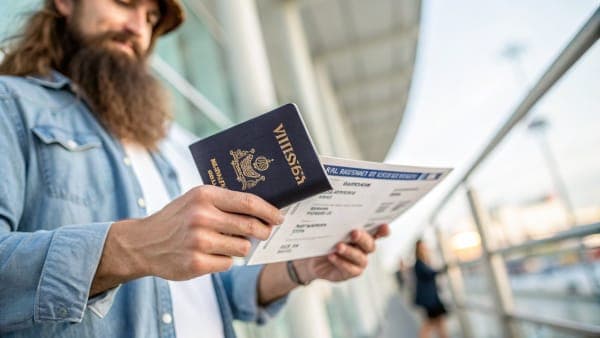
Documents You Need for a Saudi eVisa from the UAE
A UAE resident needs four things for a Saudi tourist eVisa: a passport valid at least six months beyond the entry date, a UAE residence visa valid at least three months beyond that date, a 200 by 200 pixel photo on a white background, and an address in Saudi Arabia. No embassy, appointment or biometrics is needed, and VisaWadi files it for AED 700 all inclusive, medical insurance included.
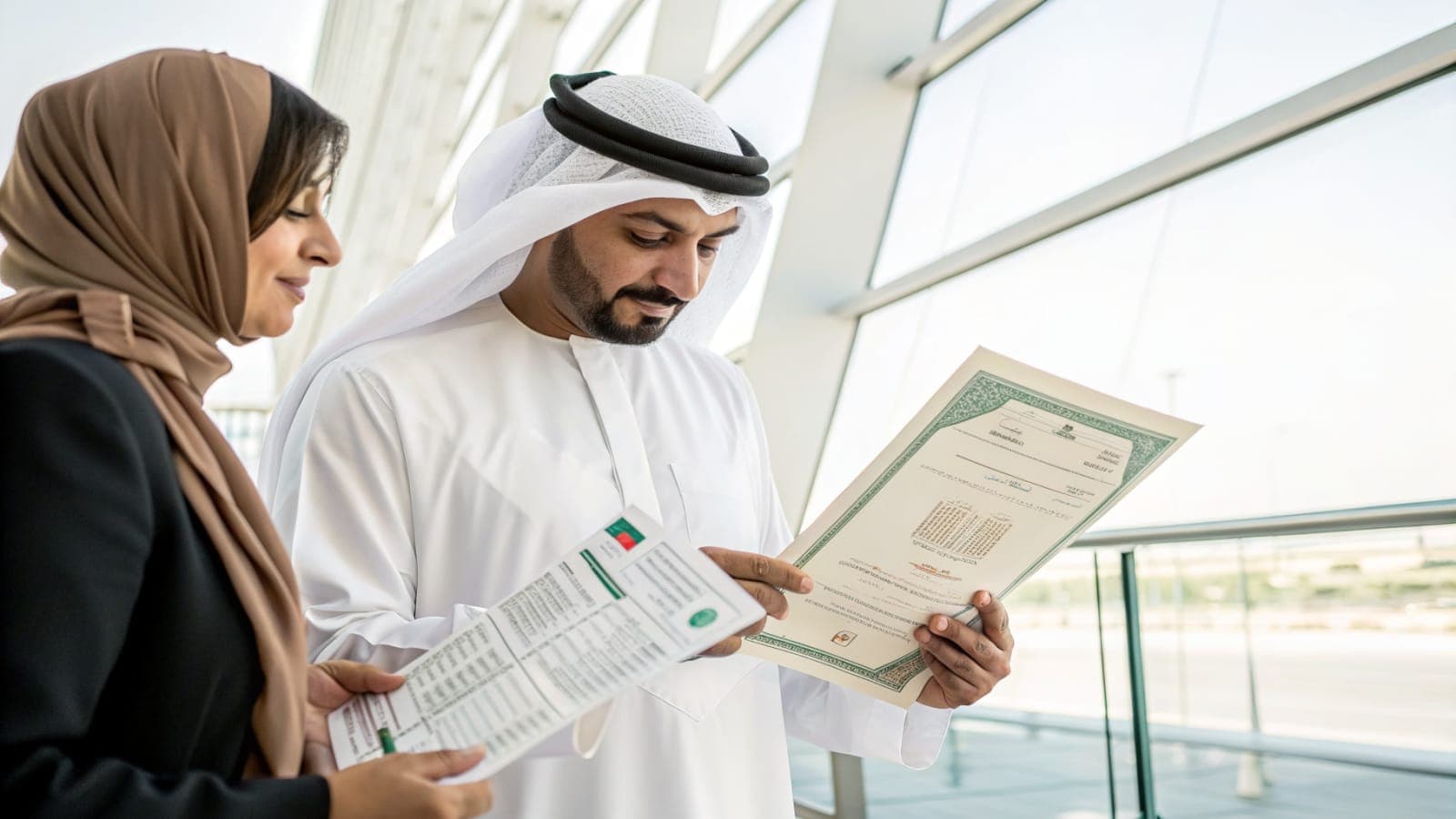
You need four things for a Saudi tourist eVisa as a UAE resident: a passport valid for six months beyond your entry date, a UAE residence visa valid for three months beyond that date, a recent passport-style photo, and the details of where you will stay in Saudi Arabia. There is no embassy visit, no appointment and no biometrics run. VisaWadi's Saudi Arabia visa assistance files the whole application for AED 700 all inclusive.
| Fact | Detail | Source |
|---|---|---|
| Who qualifies | Expats holding a residence visa from a GCC country. GCC citizens need no visa at all | Visit Saudi |
| Residence visa validity | At least three months beyond your date of entry into Saudi Arabia | Visit Saudi |
| Passport validity | At least six months beyond your date of entry | Visit Saudi |
| Visa validity and stay | Multiple entry, valid one year from issue, stays of no more than 90 consecutive days | Visit Saudi |
| Medical insurance | Mandatory, issued with the visa and valid one year from issue | Visit Saudi FAQ |
| Photo | 200 x 200 pixels, 5 to 100 KB, white background, taken within six months | Saudi eVisa portal |
| Cost through VisaWadi | AED 700 all inclusive, refunded in full if refused | VisaWadi |
What documents do you need for a Saudi eVisa from the UAE?
The list is short because the eVisa is built for GCC residents and skips the embassy paperwork. Here is everything VisaWadi will ask you for.
- Passport, valid for at least six months beyond your entry date, per the Visit Saudi requirements
- UAE residence visa, valid for at least three months beyond your entry date, per the same Visit Saudi requirements
- Emirates ID, which shows the residence visa is current and matches the passport
- One digital photo, 200 x 200 pixels, 5 to 100 KB, white background, no older than six months, per the eVisa photo specifications
- An address in Saudi Arabia, since the Tourist Visa Regulations require every applicant to register their address inside the Kingdom
- Your email address and mobile number for the approval notice
- For a child under 18, the parent's own approved eVisa first, per Visit Saudi
Am I eligible for the Saudi eVisa as a UAE resident?
Yes, if you hold a UAE residence visa with at least three months left beyond your entry date and a passport with at least six months left. Visit Saudi lists those two conditions as the requirements for the GCC residency eVisa route. Your nationality does not matter here because the residence visa is what qualifies you.
GCC citizens are a separate case and should not apply. Visit Saudi's own visa regulations page states that GCC nationals do not need a visa and can travel on their ID or passport. If you are a Kuwaiti, Bahraini, Omani, Qatari or Emirati passport holder living in the UAE, skip this post and just travel.
The Ministry of Tourism's Tourist Visa Regulations tie the GCC residency route to the professions published on visitsaudi.com, and extend it to first-degree relatives travelling with the residence holder and to domestic workers travelling with their sponsors. The current Visit Saudi requirements list names no profession restriction. If your job title has ever caused a problem, our post on whether GCC residents need a Saudi visa walks through the edge cases.
Want someone to check your file first?
We review every document against current embassy requirements and flag what causes refusals.
How long must my UAE residence visa and passport be valid?
Three months for the residence visa and six months for the passport, both counted from the day you enter Saudi Arabia, not the day you apply. That is how Visit Saudi words it: "a minimum validity of at least three months beyond the date of entry" and "a minimum of six months beyond the date of entry". Count forward from your planned arrival date before you do anything else.
The six-month passport rule also sits in Article 5 of the Tourist Visa Regulations, which lists a passport "valid for no less than 6 months" as a condition for every tourist visa applicant. If your passport expires sooner, renew it first. If your residence visa renewal is in progress, wait for the new visa before filing.
What are the photo requirements for the Saudi eVisa?
A single square digital photo, 200 by 200 pixels and between 5 and 100 KB, is the only image the application takes. The Saudi eVisa photo specifications say the face must fill 70 to 80 percent of the frame, the background must be plain white with no shadows, and the picture must be no more than six months old.
Head coverings are not allowed except for religious reasons, and even then the face must show from chin to forehead. Look straight at the camera with both ears and cheeks visible, per the same specifications. A phone photo against a white wall in daylight passes this test more often than an old studio print that has been scanned.
This is a looser standard than a Schengen or UK biometric photo, so do not reuse a cropped visa photo from another application without checking the pixel size. Our comparison of visa photo requirements across Schengen, UK, US and Canada shows where each one differs.
Do I need travel insurance, a flight booking or a hotel booking?
Medical insurance is mandatory, but you do not buy it separately. The Visit Saudi FAQ says GCC residents obtain the medical insurance as part of the tourist visa application process, that the policy is issued with the eVisa, and that it runs one year from the date of issue to match the visa. VisaWadi's AED 700 already covers that policy along with the government fee.
No flight booking or hotel booking is required for the eVisa route. Those items appear in Article 6 of the Tourist Visa Regulations only for applicants using an embassy or the digital embassy, who must submit a return ticket with a flight itinerary, an accommodation booking, an employment certificate and a bank statement or salary certificate. GCC residence holders are named in the same article as excluded from that list.
You do need an address in Saudi Arabia, because Article 5 of the regulations requires the applicant to register their address inside the Kingdom. A hotel name and city is enough for the form. If you fall into the embassy route instead, say because you hold a diplomatic passport, Dummy Ticket 365 can issue a flight reservation with a real PNR from USD 13 for the return ticket line.
How does VisaWadi file the Saudi eVisa for you?
You send us your passport, residence visa, Emirates ID and photo on WhatsApp or email, and we handle the rest. The Visit Saudi page explains that GCC residents are redirected to the KSA Visa Portal to fill the application, pay the fee and receive the visa online, and that is the portal we file through. There is no embassy, no appointment and no biometrics session.
The fee is AED 700 all inclusive. That covers the Saudi government charge and the mandatory medical insurance, and the full amount is refunded if the visa is refused. If you want help with your Saudi Arabia application, open the free consultation form on that page and we will check your documents before anything is submitted.
Family members are filed from the same account. The Visit Saudi FAQ confirms a GCC resident can apply for a husband, wife, parents and children after submitting their own application. Each person needs their own passport, residence visa and photo that meet the rules above.
What can I do on the visa once it is issued?
Tourism, family visits, events and Umrah outside the Hajj season. Visit Saudi says any type of visa allows travellers to perform Umrah and points them to the Nusuk platform for the appointment. The FAQ adds that Hajj needs a specific Hajj visa from the Ministry of Hajj and Umrah.
The visa is multiple entry, valid for one year from the issue date, with stays of no more than 90 consecutive days according to Visit Saudi. Article 3 of the Tourist Visa Regulations puts the same limit as a stay not exceeding three months during the visa's validity period. Plan on the stricter reading and keep each visit under 90 days.
Work of any kind is off limits. Article 10 of the regulations bars tourists from "any paid or unpaid work", from performing Hajj without a Hajj visa, and from Umrah during the Hajj season. Breaking any of those puts your visa and future entries at risk.
Why do Saudi eVisa applications from the UAE get refused?
Almost every refusal we see comes down to a document that failed one of the validity rules above, not to the applicant's profile. These are the avoidable causes.
- Residence visa with under three months left. Visit Saudi counts the three months from your date of entry, so a visa with four months left today can still fall short for a trip booked next month.
- Passport under six months. The same page and Article 5 of the regulations set six months from entry. Renew before you apply.
- Applying as a GCC citizen. GCC nationals need no visa per Visit Saudi, so the application is pointless and the fee is lost.
- A photo that fails the spec. Wrong pixel size, a patterned background, shadows or a picture older than six months all breach the photo specifications and get the file bounced back.
- Passport details typed wrong. A single digit off in the passport number or a name that does not match the machine-readable zone leads to a mismatch when your residence visa is checked against it.
- Diplomatic or special passport. The Visit Saudi FAQ says these passports are no longer eligible online and must apply through a Saudi embassy.
- Child applied before the parent. Visit Saudi requires the parent's eVisa to be approved first for travellers under 18.
One more point on money. The Visit Saudi FAQ states that tourist visa fees are non-refundable in any case, which is why VisaWadi checks every document before filing and refunds the full AED 700 if the visa is refused.
How much does the Saudi eVisa cost from the UAE?
AED 700 per person through VisaWadi, and that is the whole bill. There is no embassy fee, no visa centre fee and no separate insurance purchase, because the eVisa route has none of those steps.
| Item | Amount | Notes |
|---|---|---|
| VisaWadi service fee | Included in AED 700 | Document check, application filing, tracking to decision |
| Saudi government eVisa fee | Included in AED 700 | Paid on your behalf through the KSA Visa Portal, nothing extra to pay |
| Mandatory medical insurance | Included in AED 700 | Issued with the visa, valid one year per the Visit Saudi FAQ |
| Embassy or visa centre fee | AED 0 | No embassy, appointment or biometrics on the eVisa route |
| Total | AED 700 all inclusive | Refunded in full by VisaWadi if the visa is refused |
For the full breakdown of eligibility and timing, read our guide to the Saudi tourist eVisa for UAE residents. When your documents are ready, start with a free consultation through VisaWadi's Saudi Arabia visa service.
Sources
- Saudi Arabia Visa Requirements, GCC residency eVisa route, Visit Saudi (Saudi Tourism Authority)
- Visa and travel FAQ, Visit Saudi (Saudi Tourism Authority)
- Tourist Visa Regulations, Ministry of Tourism, Kingdom of Saudi Arabia
- Photo Specifications, Saudi eVisa portal (visa.visitsaudi.com)
Ready to file your Saudi eVisa from the UAE?
Send VisaWadi your passport, residence visa, Emirates ID and photo, and we check each one against the Visit Saudi rules before filing. The fee is AED 700 all inclusive, covering the government charge and medical insurance, with a full refund if the visa is refused. Start with a free consultation on your Saudi Arabia visa.
Frequently Asked Questions
Written by

Ammar Afridi
Co-founder, Marketing Manager and Visa Consultant
Ammar Afridi co-founded VisaWadi, a Dubai-based team that prepares visa applications for UAE residents. He has spent four years working on Schengen, UK, US and Canada files, and has handled more than 2,000 applications.
Visa assistance
From AED 299
Every document checked against current embassy requirements before you submit.
Get free consultation