Saudi Arabia Entry Requirements for UAE Residence Visa Holders
UAE residence visa holders who are not GCC citizens need a Saudi tourist eVisa, with no embassy or appointment. Visit Saudi requires a residence visa valid at least three months beyond your entry date and a passport valid at least six months. The eVisa is multiple entry, valid for one year, with stays capped at 90 days. VisaWadi files it for AED 700 all inclusive, refunded in full if refused.
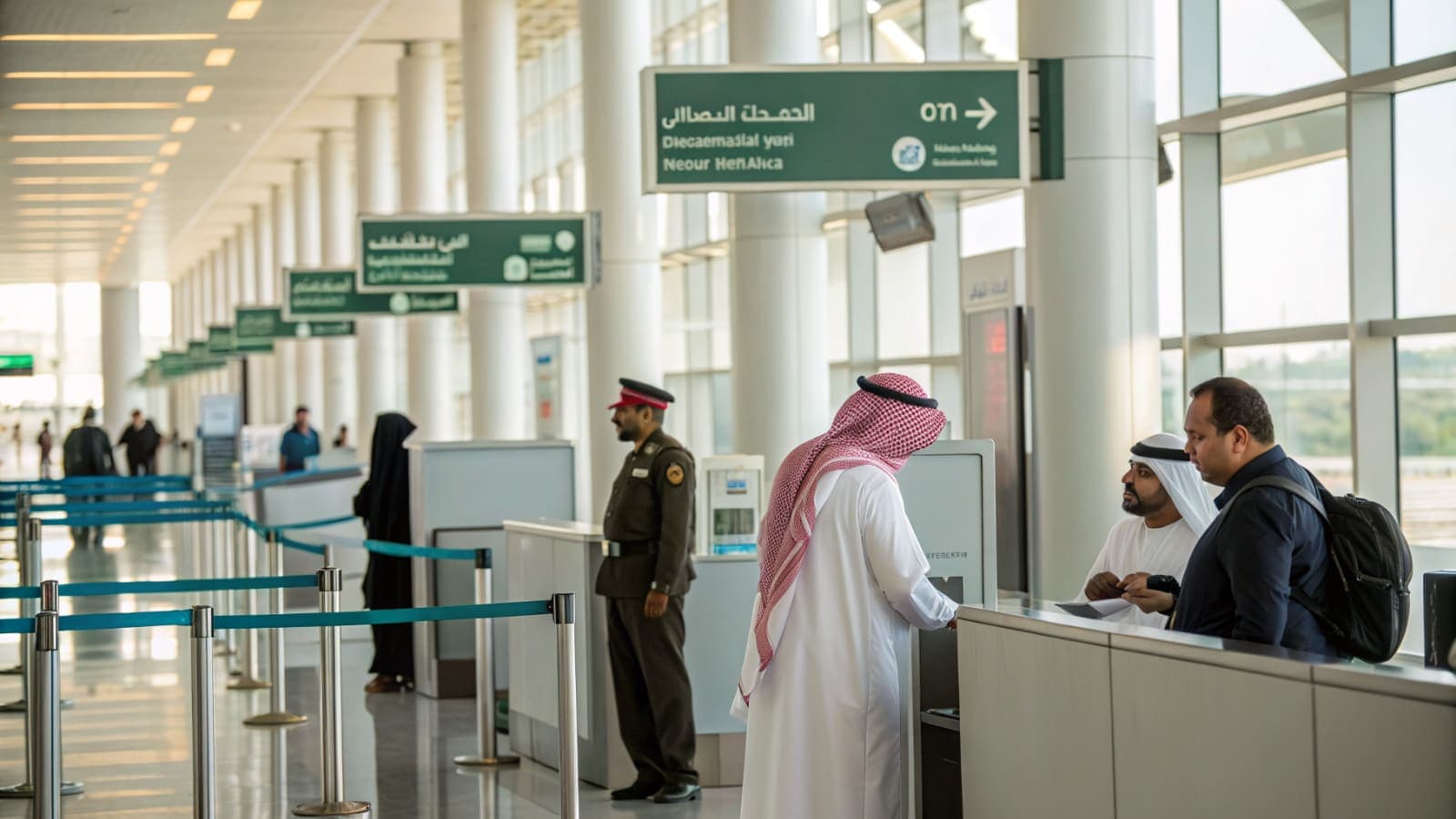
If you hold a UAE residence visa on a non-GCC passport, you can enter Saudi Arabia on a tourist eVisa without visiting an embassy. Visit Saudi lists two conditions for GCC residents: a residence visa valid for at least three months beyond your entry date and a passport valid for at least six months. The eVisa is multiple entry, valid for one year, and VisaWadi files it for AED 700 all inclusive.
| Entry requirement | Rule for UAE residence visa holders | Source |
|---|---|---|
| Visa type | Tourist eVisa, or a visa through a Saudi embassy | Visit Saudi Help Center |
| UAE residence visa validity | At least three months beyond the date of entry into Saudi Arabia | Visit Saudi visa regulations |
| Passport validity | At least six months beyond the date of entry | Visit Saudi visa regulations |
| Validity and entries | One year from issue, multiple entry | Visit Saudi visa regulations |
| Stay allowed | No more than 90 consecutive days per the Visit Saudi page; no more than 3 months during the validity period per the Ministry of Tourism regulation | Ministry of Tourism, Article 3 |
| Medical insurance | Issued as part of the tourist visa application | Visit Saudi Help Center |
| Ports of entry | Any formal port of entry, including land borders | Visit Saudi Help Center |
What you need
- A passport valid for at least six months beyond your entry date, as stated on the Visit Saudi visa regulations page
- A UAE residence visa valid for at least three months beyond your entry date, from the same page
- Medical insurance approved in the Kingdom, which is issued with the eVisa according to the Visit Saudi Help Center
- An address inside Saudi Arabia, which Article 5 of the Tourist Visa Regulations requires every applicant to register
- The visa fee, which is inside VisaWadi's AED 700 package with nothing to pay on top
- For a child under 18, a parent's eVisa issued first, as the Visit Saudi GCC residents tab requires
Do UAE residence visa holders need a visa for Saudi Arabia?
Yes, unless you hold a GCC passport. Visit Saudi states that GCC nationals do not need a visa and can travel on an ID card or passport, so an Emirati, Omani, Bahraini, Kuwaiti or Qatari citizen living in the UAE can skip this article and just drive or fly.
Everyone else with a UAE residence visa needs a tourist visa. The Visit Saudi Help Center confirms that GCC residents are welcome to apply, and that the visa can be issued as an eVisa or through the embassy.
The eVisa is the route that matters for you. There is no appointment, no visa centre and no biometrics session in Dubai or Abu Dhabi, and VisaWadi's Saudi Arabia visa service prepares and files the application for AED 700 all inclusive.
Your nationality affects one thing: whether the online route is open to you. The Help Center notes that holders of diplomatic or special passports must now apply through a Saudi embassy, so if that is your passport type the eVisa is not available.
How long must your UAE residence visa and passport be valid?
Three months for the residence visa and six months for the passport, both counted from your entry date. The Visit Saudi visa regulations page puts it plainly: "You must provide a residency visa from one of the GCC countries with a minimum validity of at least three months beyond the date of entry into Saudi."
The same page adds that your passport must be valid for a minimum of six months beyond the date of entry. The Ministry of Tourism regulation repeats the six month passport rule in Article 5 and the three month residence rule in Article 6.
Check the residence visa first, because it expires sooner than people expect. The UAE Government portal explains that a sponsored residence visa runs for 1, 2 or 3 years, so someone in the final months of a two year visa can fall short of the three month rule without noticing.
Renewals catch people out in the other direction. If your employer has cancelled your visa ahead of a renewal and the new one is still being stamped, wait until it is issued before you apply, because the application is judged on the residence visa you upload.
Want someone to check your file first?
We review every document against current embassy requirements and flag what causes refusals.
How do you apply for the Saudi eVisa as a UAE resident?
Online, with no embassy visit. Article 4 of the Tourist Visa Regulations lists three ways of getting a tourist visa: on arrival, as an eVisa through the electronic platform, or through a Saudi diplomatic mission. GCC residents use the eVisa route.
Article 5 sets out what every applicant does: fill in the application form with supporting documents, hold a passport valid for no less than six months, obtain medical insurance approved in the Kingdom, register an address inside Saudi Arabia and pay the fee. Biometrics are registered "during the application process or upon arrival", which in practice means at the border for eVisa holders.
The regulation also says the GCC residents route covers "the professions published on www.visitsaudi.com". The live requirements tab on Visit Saudi lists only the residency and passport conditions, and VisaWadi checks your profession against it before filing.
Family members ride on your application. The Help Center states that a GCC residency holder can apply for first degree family members, meaning husband, wife, parents and children, from the same account after submitting their own application.
Children need a specific order of steps. Visit Saudi says a parent must obtain their own eVisa before applying for a traveller under 18, and Article 5 of the regulation says a tourist under 18 must be accompanied by a guardian or a safe companion.
If you would rather not handle the portal yourself, get help with your Saudi Arabia application from VisaWadi. The AED 700 covers the government fee and the mandatory medical insurance, and the full amount is refunded if the visa is refused.
How long can you stay in Saudi Arabia on the eVisa?
Up to 90 days, on a visa that stays valid for a year and allows repeated trips. The Visit Saudi GCC residents tab describes the multiple entry visa as "valid for one year from the date of issuance" and allowing "a stay of no more than (90) consecutive days".
The Ministry of Tourism regulation phrases the limit differently. Article 3 says the multiple entry visa is valid for one year "provided that the duration of the stay does not exceed 3 months during its validity period", which reads as a total across the year rather than per trip.
Plan to the stricter reading. If you make several trips from the UAE in one year, keep your combined days inside three months and no single visit beyond 90 days, and you satisfy both texts.
There is a UAE side to this too. The UAE Government portal warns that a residence visa is nullified automatically after more than 180 days continuously outside the UAE, and the Emirates ID expires with it, so long stays across the border count against your home status as well.
Can you use the eVisa for Umrah, family visits or business meetings?
Yes to all three, with limits on Hajj and work. Visit Saudi confirms that any type of visa allows travellers to perform Umrah, and asks you to book an Umrah appointment through the Nusuk platform.
The Help Center adds the seasonal rule: you can perform Umrah on the tourist visa "but not during the Hajj season", and Hajj itself needs a specific Hajj visa from the Ministry of Hajj and Umrah. Article 10 of the regulation makes both points binding on the visitor.
Business trips are fine within a narrow definition. The Help Center says the tourist visa "can be used for short business trips" such as meetings, conferences and workshops that do not involve a contract or paid work, and Article 10 bans "any paid or unpaid work" outright.
Two more things to know before you book. Makkah is open to Muslim visitors only while Madinah is open to all tourists, and the visa does not replace a Saudi work visa, so anyone relocating for a job needs a different permit.
What happens at the Saudi border when you arrive from the UAE?
You present the same documents you applied with, and you can arrive by road or by air. The Help Center confirms that eVisa holders "can come in from any formal port of entry", which includes the land crossing for anyone driving from the UAE.
Carry your passport with the six months of validity and evidence of your UAE residence. The residence visa is the basis of your eligibility, so an expired or cancelled one on arrival undermines the eVisa you were issued on it.
Biometrics can be taken at the port. Article 5 of the regulation allows biometric registration "upon arrival", and Article 10 requires you to hold identification documents at all times while in the Kingdom.
Your medical insurance is already in place. The Help Center explains that the policy is issued with the eVisa, is valid for one year from issue and matches the validity of the visa, so there is no separate certificate to buy before you travel.
Why do Saudi eVisa applications from UAE residents get refused?
The avoidable causes are all document mismatches, and a refusal costs you the government fee unless you applied through VisaWadi. The Visit Saudi Help Center is blunt that the tourist visa fees "are non-refundable in any case" if the eVisa is rejected, which is why VisaWadi refunds the full AED 700 on refusal.
- Residence visa with under three months left. This is the first condition on the Visit Saudi requirements tab and the easiest one to miss.
- Passport under six months. Article 5 of the Tourist Visa Regulations sets the floor, and the UAE side will not save you if the passport is short.
- Applying for a child before the parent has an eVisa. Visit Saudi requires the parent's eVisa to be issued first.
- Details that do not match the passport. Name spellings, passport number and dates copied from a residence permit rather than the passport itself.
- Applying with a cancelled residence visa during a job change. The residence visa you upload has to be valid at the time of application, not just the one you expect next month.
- Wrong passport type. Diplomatic and special passports are no longer eligible online and must go through a Saudi embassy.
Each of these is caught by a document check before filing. That is the whole point of paying for Saudi Arabia visa assistance rather than trying the portal blind.
How much does the Saudi eVisa cost from the UAE?
AED 700 through VisaWadi, with nothing added on top. Unlike a Schengen or UK application, there is no visa centre fee, no courier fee and no appointment charge, because the whole process is online.
| Cost item | Amount | Notes |
|---|---|---|
| VisaWadi Saudi eVisa package | AED 700 all inclusive | Document check, application filing, tracking to decision, full refund if refused |
| Saudi government visa fee | Included in the AED 700 | Nothing to pay separately |
| Mandatory medical insurance | Included in the AED 700 | Issued with the eVisa, valid one year |
| Embassy or visa centre fees | None | No embassy visit, appointment or biometrics session in the UAE |
If you have read our post on the Saudi tourist eVisa for UAE residents, the numbers there still apply. For the citizen versus resident question in more depth, see do GCC residents need a visa for Saudi Arabia.
Sources
- Visa Regulations, Visit Saudi (Saudi Tourism Authority)
- Help Center: Visa and Travel FAQ, Visit Saudi (Saudi Tourism Authority)
- Tourist Visa Regulations (PDF), Saudi Ministry of Tourism
- General provisions for the residence visa, The Official Portal of the UAE Government (u.ae)
Travelling to Saudi Arabia on a UAE residence visa?
VisaWadi checks your residence visa and passport dates against the Visit Saudi rules, files the tourist eVisa and tracks it to a decision, all for AED 700 with the government fee and medical insurance included. No embassy, no appointment, no biometrics in the UAE, and a full refund if the visa is refused. Get a free consultation on your Saudi Arabia eVisa today.
Frequently Asked Questions
Written by

Ammar Afridi
Co-founder, Marketing Manager and Visa Consultant
Ammar Afridi co-founded VisaWadi, a Dubai-based team that prepares visa applications for UAE residents. He has spent four years working on Schengen, UK, US and Canada files, and has handled more than 2,000 applications.
Visa assistance
From AED 299
Every document checked against current embassy requirements before you submit.
Get free consultation